
Both compact, AWD hybrid SUVs put up quite the fight. But only one is the smarter buy.
Words and photos by Kristen Brown
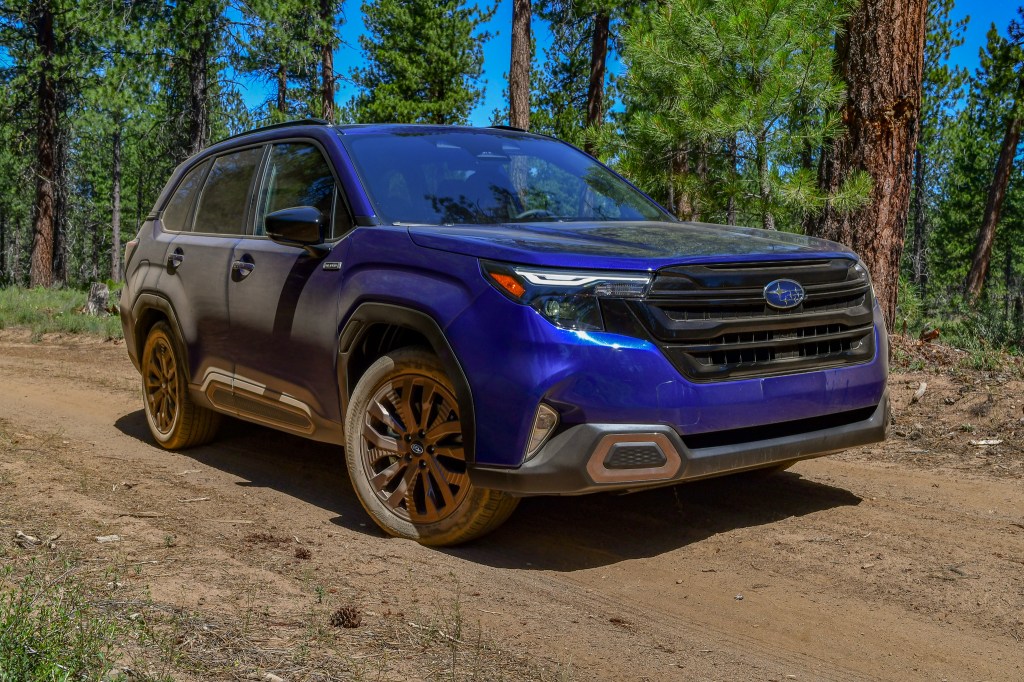
Subaru loyalists have been asking—no, begging—Subaru to produce a hybrid that isn’t an expensive Crosstrek PHEV with Toyota’s leftover technology since 2021. Subaru attempted to develop its own system in 2014 for the Crosstrek, and it was… Quite terrible. Then in 2019, Toyota and Subaru worked together for the Crosstrek PHEV, which had Toyota’s hybrid technology paired with a true AWD system. The car was okay, but the price was not. It was incredibly expensive for a small SUV PHEV. Then, Subaru gave up in 2023, and loyalists were pretty upset about it. No, unlike Subaru’s several competitors, there wasn’t a single hybrid in the Subie lineup. That all changed this year, with two new EVs and a singular hybrid—the Forester.
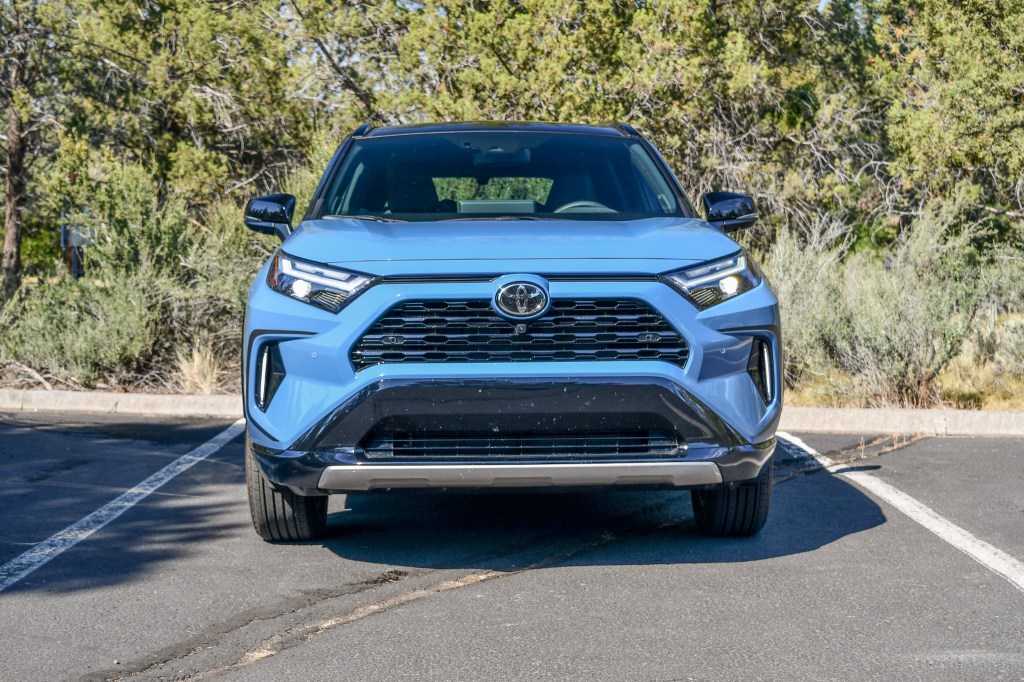
Like old times, Subaru and Toyota worked closely together to develop the 2025 Subaru Forester hybrid. Subaru developed a lot of its own technology this time around, but Toyota was absolutely at the decision-making and engineering tables for the hybridization, while Subaru helped them figure out an effective AWD system. Now, the Forester competes with the Toyota RAV4 on both sides of the coin, both as a gas-only SUV and an AWD SUV. They’re both similar in size, cargo space, family-friendliness, and now, efficiency. So, is one really better than the other?
Think of them like siblings: Similar, but different
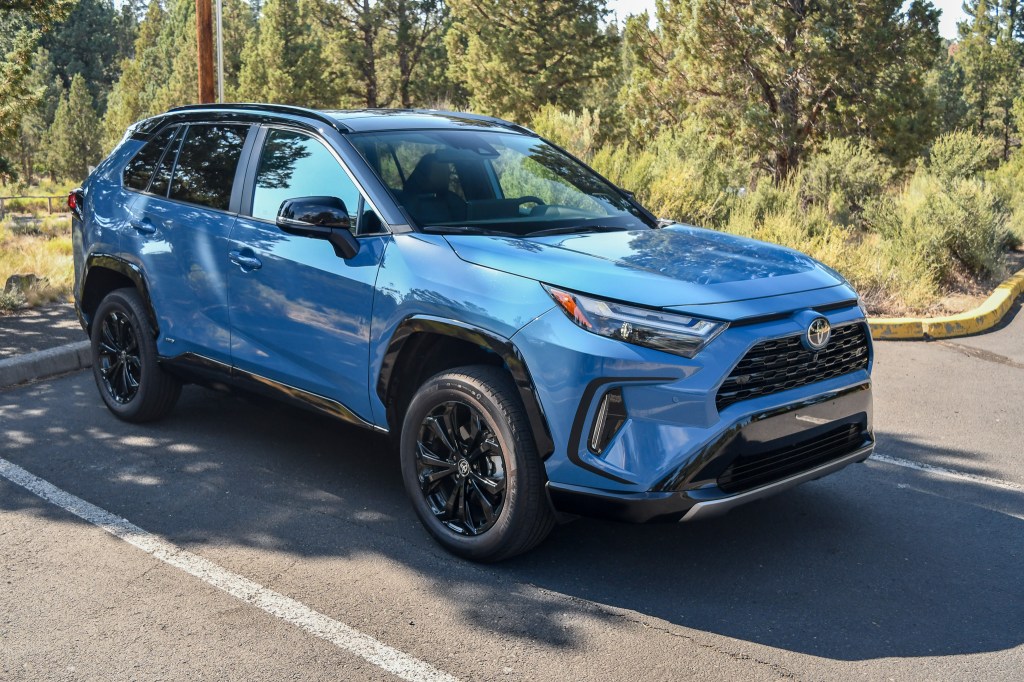
Both of them were ‘90s babies. The Toyota RAV4 came first in 1994, but it wasn’t 4WD until 1996. It fit right into the small, capable, roomy, and affordable Japanese SUVs that swept the country. Then the Subaru Forester came along in 1998, which had an AWD system and a personality that many were quickly charmed by. Both SUVs were hot sellers for both companies, but when Toyota hybridized the RAV4 in 2016 (shortly after the first model year of the Crosstrek hybrid), that’s the leg up that Toyota had over the rapidly selling Forester. The Forester wouldn’t be a hybrid until a full decade later.
Toyota’s been increasing the shares it has in Subaru since its first purchase in 2005, and the partnership has resulted in some really cool cars. The Subaru BRZ and Toyota GR86 are great examples. Subaru shared its family recipe for a great AWD system, and Toyota shared its staple secret for a good hybrid system. So, the Subaru Forester hybrid obviously shares a lot with the RAV4. But there are some key differences worth noting.
Let’s get nerdy about all-wheel drive
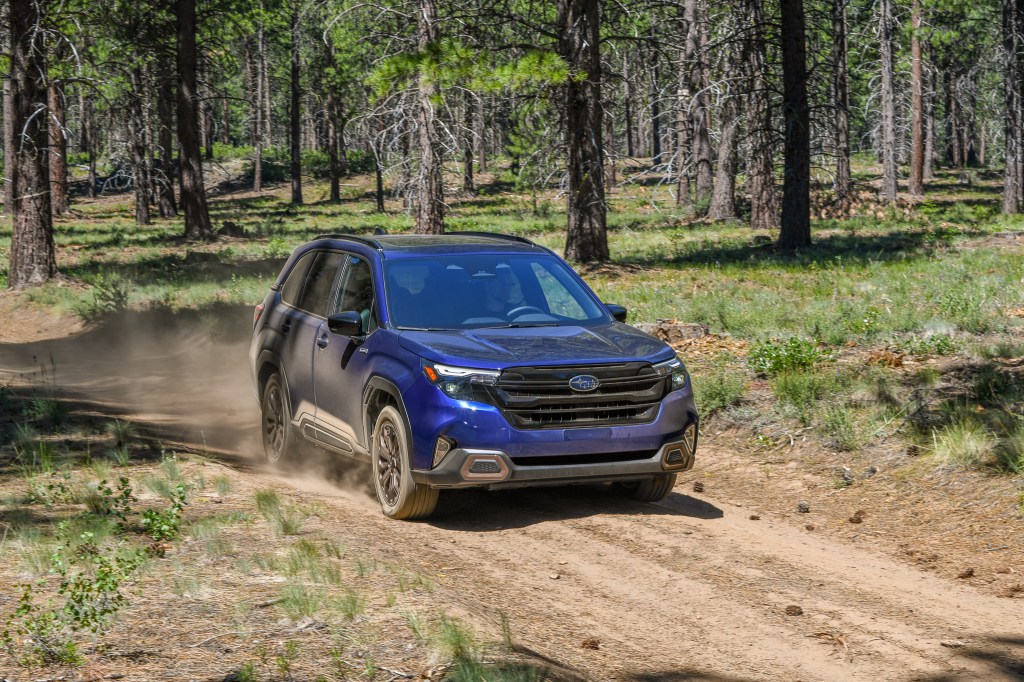
While Toyota and Subaru swap secrets, the Toyota RAV4 AWD hybrid does not include a traditional AWD system. The RAV4 is only AWD when bought as a hybrid, while the Subaru is AWD no matter what engine is in it. The AWD system in the Toyota has two axles in the front, while the rear “axle” is purely electronic. There’s no physical contact between the rear axle and the engine at all. When it doesn’t detect slipping, the SUV is programmed to bias the front wheels for the sake of efficiency. When slipping is detected or the driver puts it into “Trail” mode, the AWD system is evenly split. The brakes are automatically applied to individual wheels that don’t have traction, and power is sent to wheels that do.
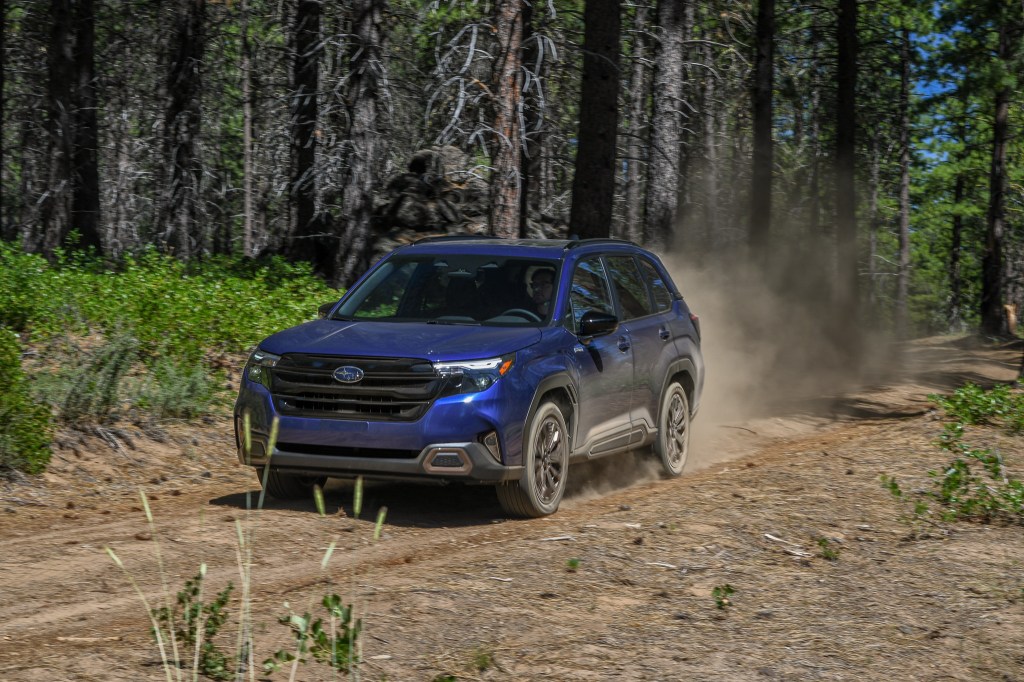
Subaru’s AWD system is more traditional. Like the Foresters before it, all four wheels have their own axle attached to the front and rear differential. There’s a center differential too, to allow the front and rear to spin at different speeds while making turns. It’s something Subaru’s always done well, and it’s quite nice to see Subaru carry the torch into the next generation. Its only downside, though, and it’s a big one, is the fact that a mechanical AWD system is much thirstier than an electronic (or “intelligent”) AWD system. It’s more effective off-road and in poor weather conditions, but at the cost of miles per gallon.
The Toyota is miles ahead of the Subaru… Literally
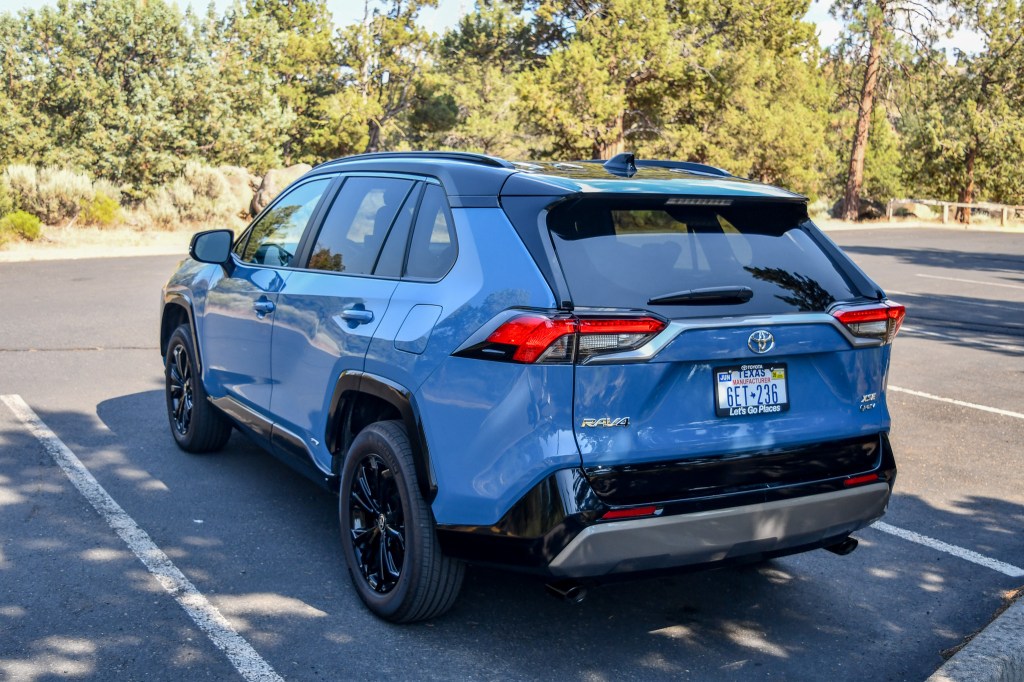
When I had the Toyota (a week before the Subaru), and was amazed by how efficient it was for being AWD. During my week, I was averaging 36.2 mpg in Normal. When I switched it to Eco mode halfway through my review, I was getting 36.3. I’m confident that if I’d had it in Eco the whole time, I would be getting closer to 38 mpg, no problem. With two kids in their car seats, gear, my husband, and it being a mid-sized SUV, that’s impressive. To date, I haven’t driven a more efficient hybrid SUV.
The Subaru, on the other hand, never made it over 30 mpg. Mostly driving around town with the occasional jaunt on the highway, the closest I got to 30 mpg was 29.2. On the days when I’m mostly driving around town with lots of stopping and going at low speeds, it dropped to 26.5. Which, by the way, for an SUV that has a true, mechanical AWD system, is fantastic. Another advantage of the RAV4 over the Forester is the pricing. The LE, which is the base model of the RAV4 hybrid, starts at $32,600, while the Forester hybrid starts at $36,595. The maximum MSRP for the RAV4 Limited is $40,905, while the Subaru Touring hybrid is $43,295.
Now, if we’re talking about a PHEV, the Toyota becomes the more expensive choice. But the Forester doesn’t have a PHEV, so it’s not exactly a fair competition.
Both are roomy, just in different ways
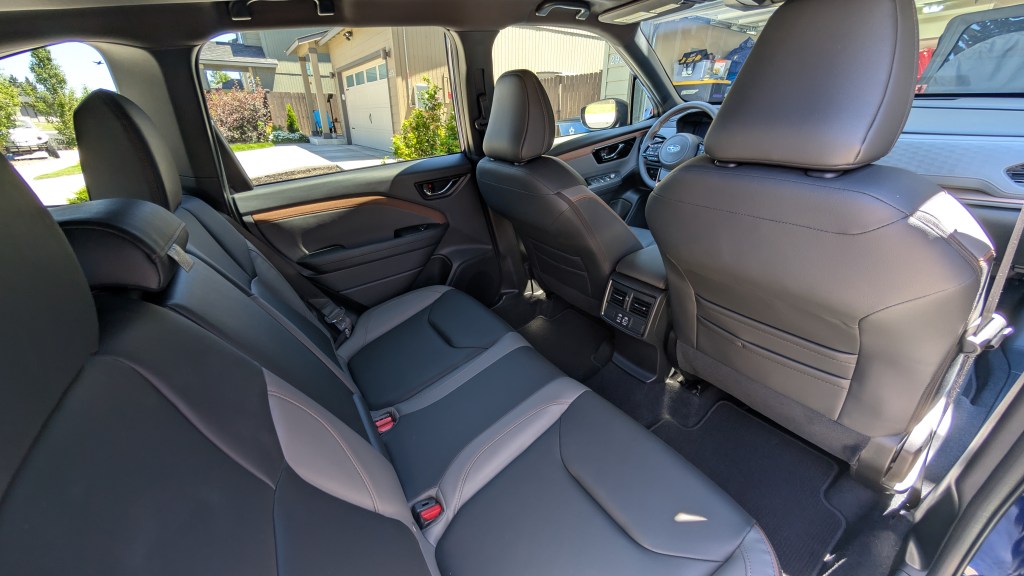
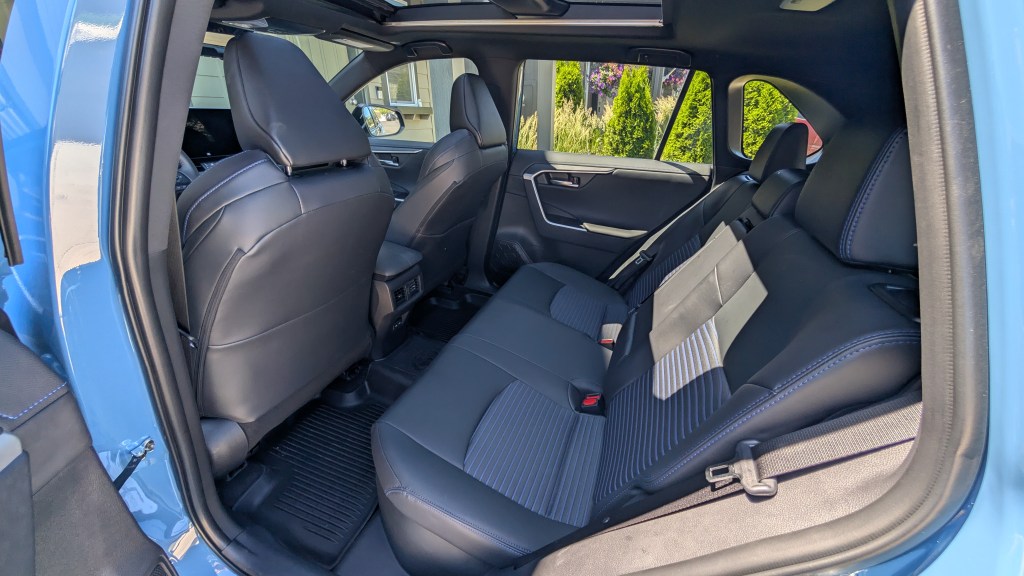
The 2026 Subaru Forester Sport Hybrid and the 2025 Toyota RAV4 XSE Hybrid differ meaningfully in both cargo space and legroom, though I found both to be plenty spacious. The Forester Sport Hybrid offers 29.6 cubic feet of cargo space behind the second row in its base configuration and up to 74.4 cubic feet with the seats folded; most trims with the panoramic moonroof provide 27.5 cubic feet behind the second row and 69.1 cubic feet when folded. It also delivers generous passenger room in the rear, with 39.4 inches of rear legroom, giving it one of the roomier second rows in its class.
The RAV4 offers a clear advantage in everyday cargo usability with 37.5 cubic feet behind the second row and 69.8 cubic feet when folded. Legroom is competitive but slightly tighter in the rear compared with the Forester, offering 37.8 inches of legroom in the rear. This makes the RAV4 more accommodating for cargo with the seats up, while the Forester provides a bit more stretch-out space for rear passengers.
TL;DR: The Forester trades a bit of trunk space for more legroom in the rear, while the RAV4 is opposite.
The interior of either is fine, but the Subaru was easier to clean
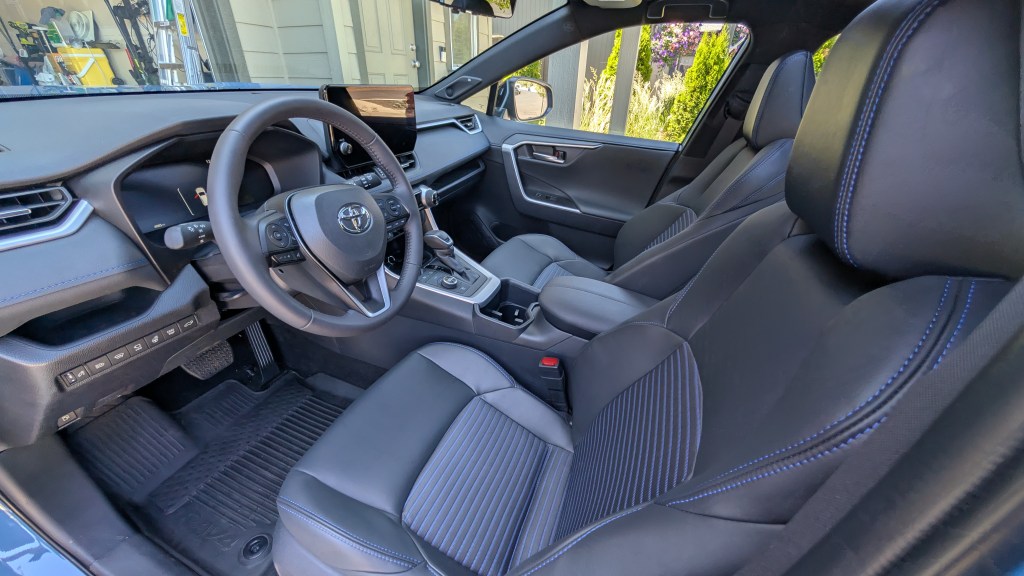
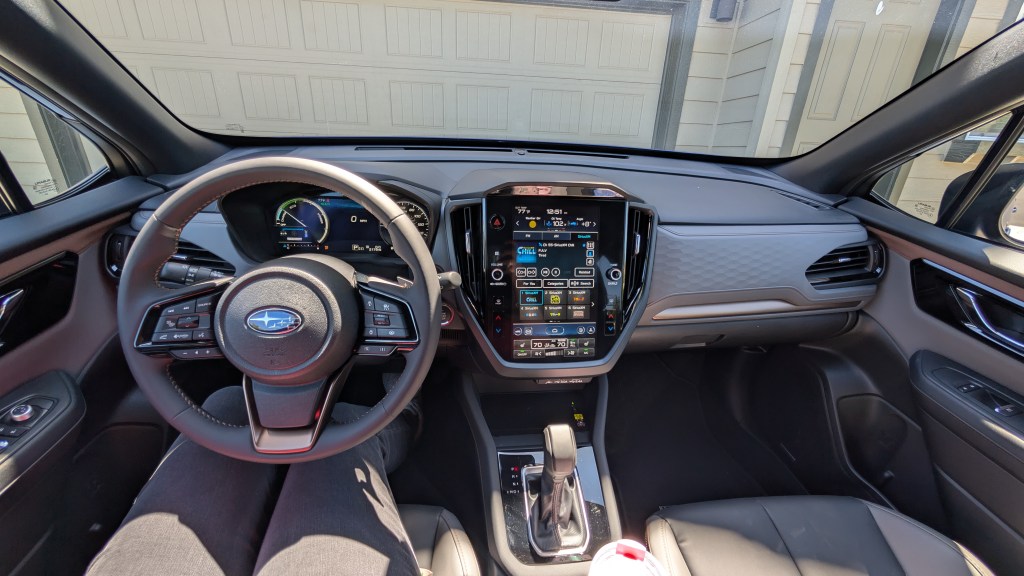
In either SUV, I enjoyed the open, bright interiors. Every setting you could wish for was well within reach, there were clever storage compartments and cubbies wherever you looked, and the seats—both front and rear—were comfortable with excellent outward visibility. The sunroof was bigger in the Forester, which my toddlers appreciated immensely, as well as the rear windows, because they could see their world a bit better back there compared to the RAV4.
As far as screens are concerned, I was never a fan of Toyota’s “slap an iPad on the dashboard” strategy. From the driver’s seat, it eats up a noticable amount of vertical space out of the windshield, and it’s disruptive (picky, I know). I prefer Subaru’s integrated screen approach. The RAV4 has physical knobs and buttons for the HVAC controls and seat heaters, which is always better than it being buried in a screen, but Subaru does work around that by having those controls permanently displayed at the bottom of the display.
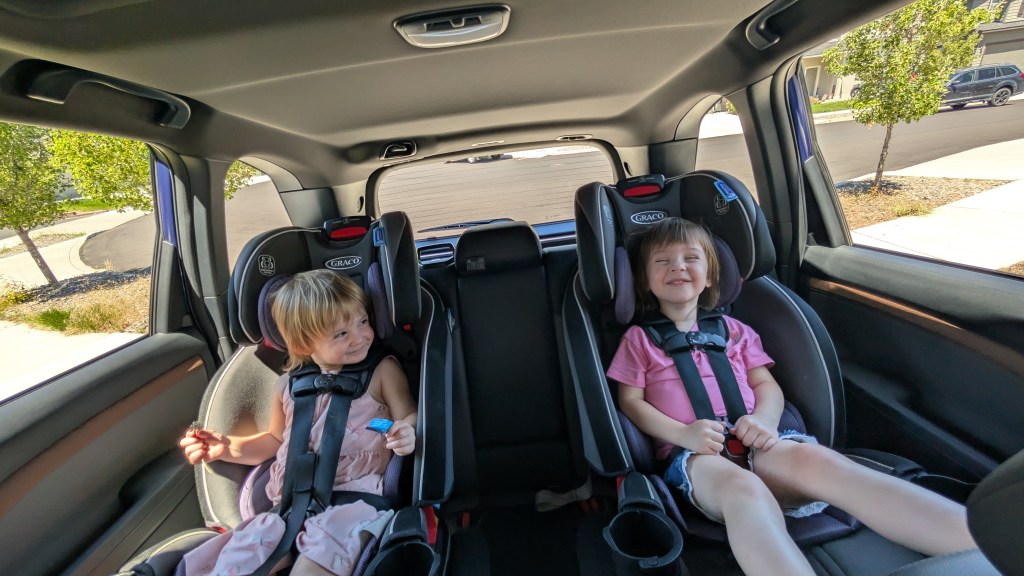
When it came to cleaning up after two crazy kids, the Subaru’s leatherette material on the seats were much easier to clean over the RAV4’s cloth and leatherette combo. I can say from experience: trying to get spilled chocolate milk and whipped cream off of the cloth completely was much harder than the Subaru’s full leatherette seats.
The verdict: it depends on why you’re cross-shopping
I came to love both SUVs, especially with my kids in tow. Both had ample space, had a smooth ride, a reasonable price tag, great visibility, mileage, and excellent safety suites. It helps that both have excellent reputations for being safe, too. The one I’d recommend depends heavily on what someone is looking for from either SUV. If the priority was mileage and not all-wheel drive capabilities, the RAV4 is what I’d recommend with my whole heart. If someone said all-wheel drive mattered more than mileage, then I’d push them earnestly towards their local Subaru dealership. There is so much potential in Subaru’s new hybrid system, and I’ll be watching its journey with eager eyes. Maybe, just maybe, it’ll finally replace my 2011 Forester.
 Geared to Drive